Live stream intelligence
Existing RTSP, ONVIF, HLS and WebRTC feeds become a continuously monitored source of operational signals without replacing the camera estate.
Zorik connects existing camera feeds with live detection, configurable alerts and an operator workspace designed for faster, more informed response.
The opportunity
Most CCTV estates are optimized to record what happened. Valuable signals remain distributed across many feeds, leaving people to monitor screens continuously or search footage after an incident.
The product challenge was to make those cameras operationally useful in the moment: identify relevant safety, security and movement events, keep false urgency manageable, and route each detection with enough context for a person to act.
Zorik also needed to fit the infrastructure already in place. Standard camera protocols, visible stream health and cloud, edge or on-premise deployment make the intelligence layer adaptable to different sites and data boundaries.
Product strategy
The experience brings model capability and day-to-day camera operations into the same understandable system.
Existing RTSP, ONVIF, HLS and WebRTC feeds become a continuously monitored source of operational signals without replacing the camera estate.
Operators can select built-in event and object detections, define custom concepts, and shape each rule around a specific monitoring need.
Sightings, locations, timestamps and confidence cues give teams a traceable view of what was detected and where it appeared.
Priority controls and push, email, SMS, webhook or operational-system routes help move a detected event toward the right response.
Operating flow
Register existing cameras or an NVR through standard video protocols and keep stream health visible.
Choose a built-in detection or describe a custom event, then apply priority and notification rules.
GPU-accelerated vision models inspect live video and surface events as they occur.
Operators receive context, inspect recent sightings, escalate when needed and maintain a visible operational trail.
Inside the product
Each workspace turns a different part of live video operations into a clear, controlled task—from seeing urgency to defining detections and maintaining stream readiness.
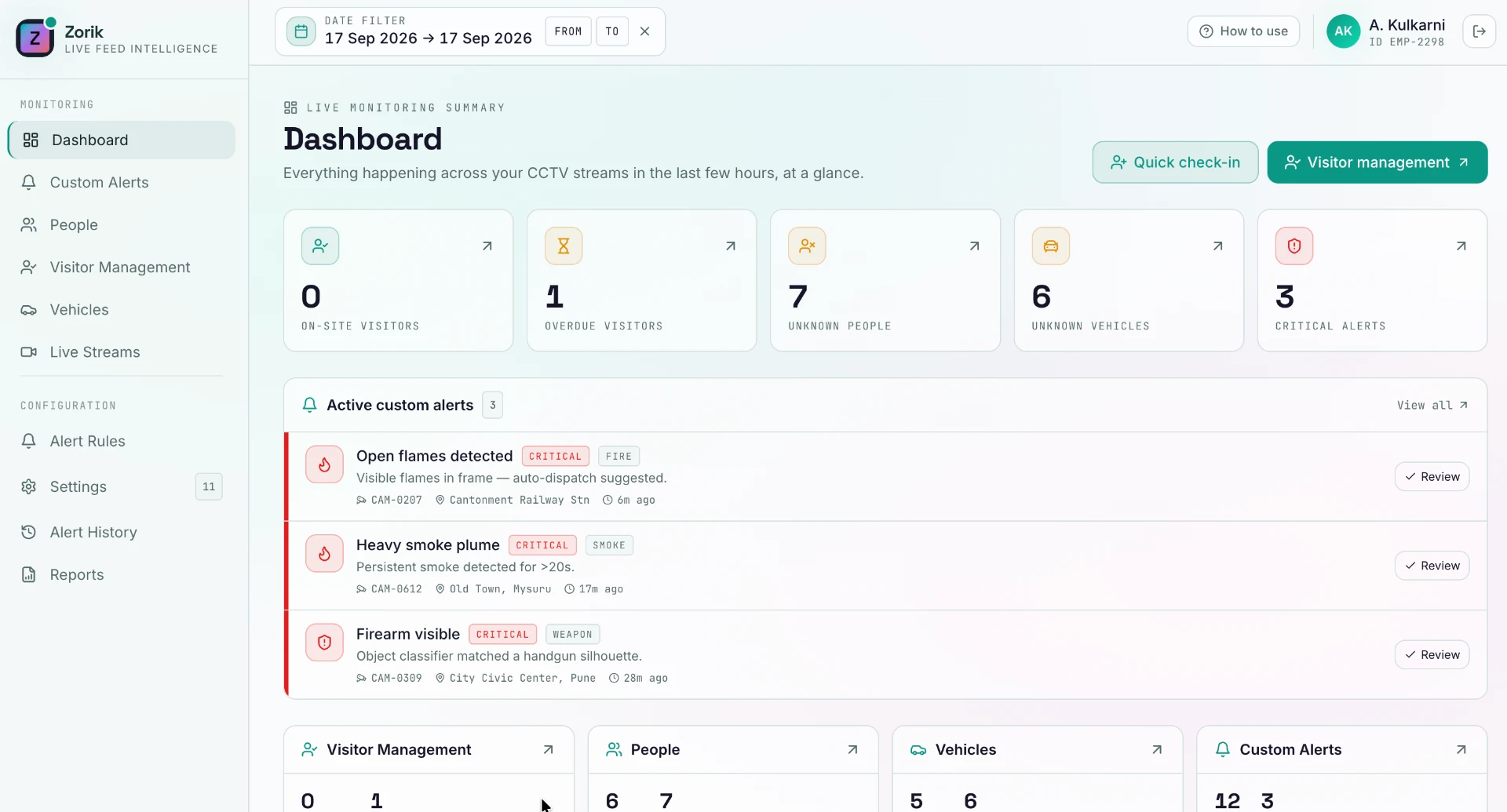
The dashboard brings visitor activity, unknown people and vehicles, camera events and critical alerts into one scan-friendly view. Operators can see active issues first, then move directly into review or the relevant management workflow.
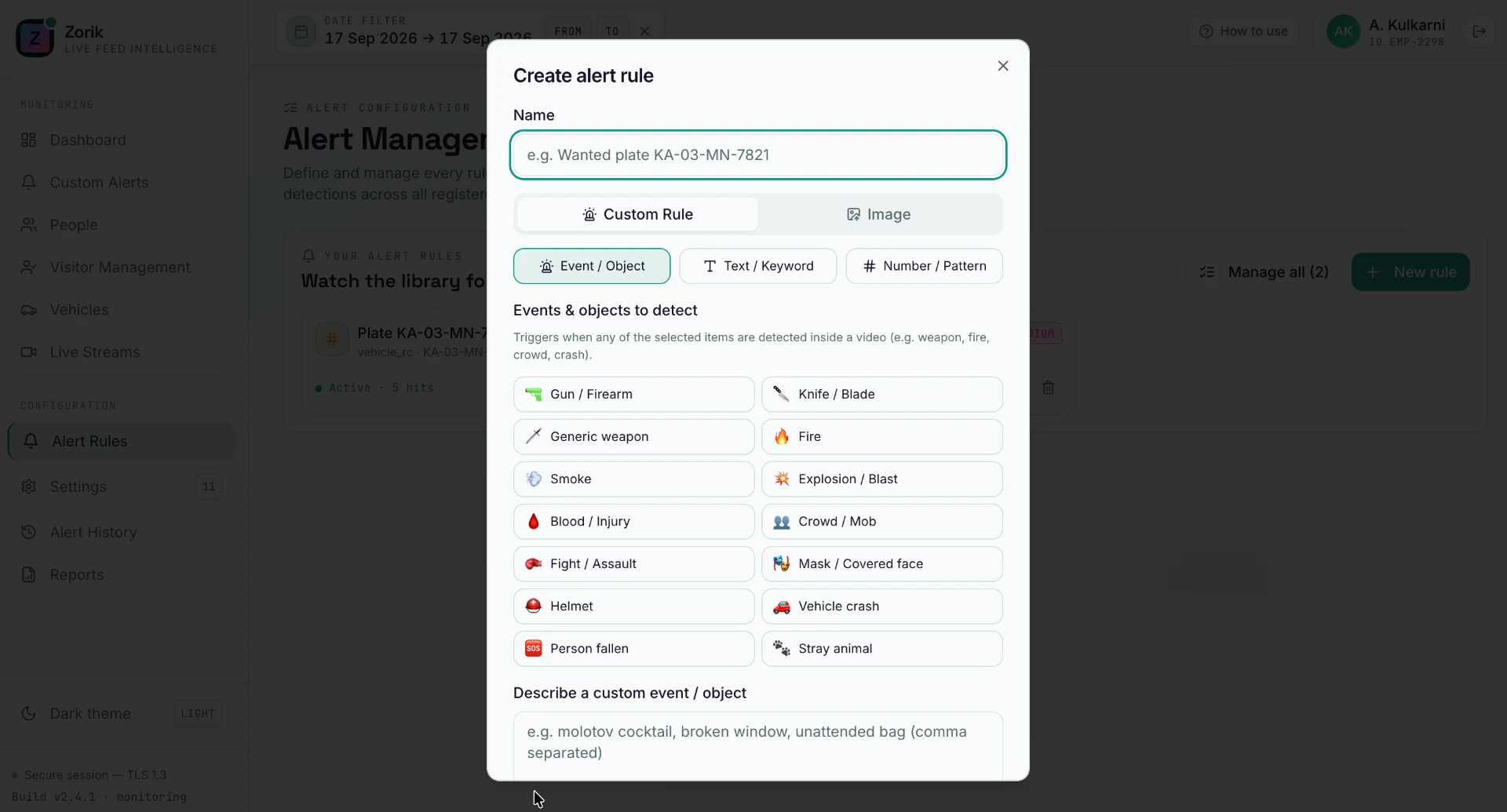
The alert builder makes detection configurable without exposing model complexity. Teams can choose recognizable events and objects, use image matching, add text or number patterns, and describe a custom event for a specific site requirement.
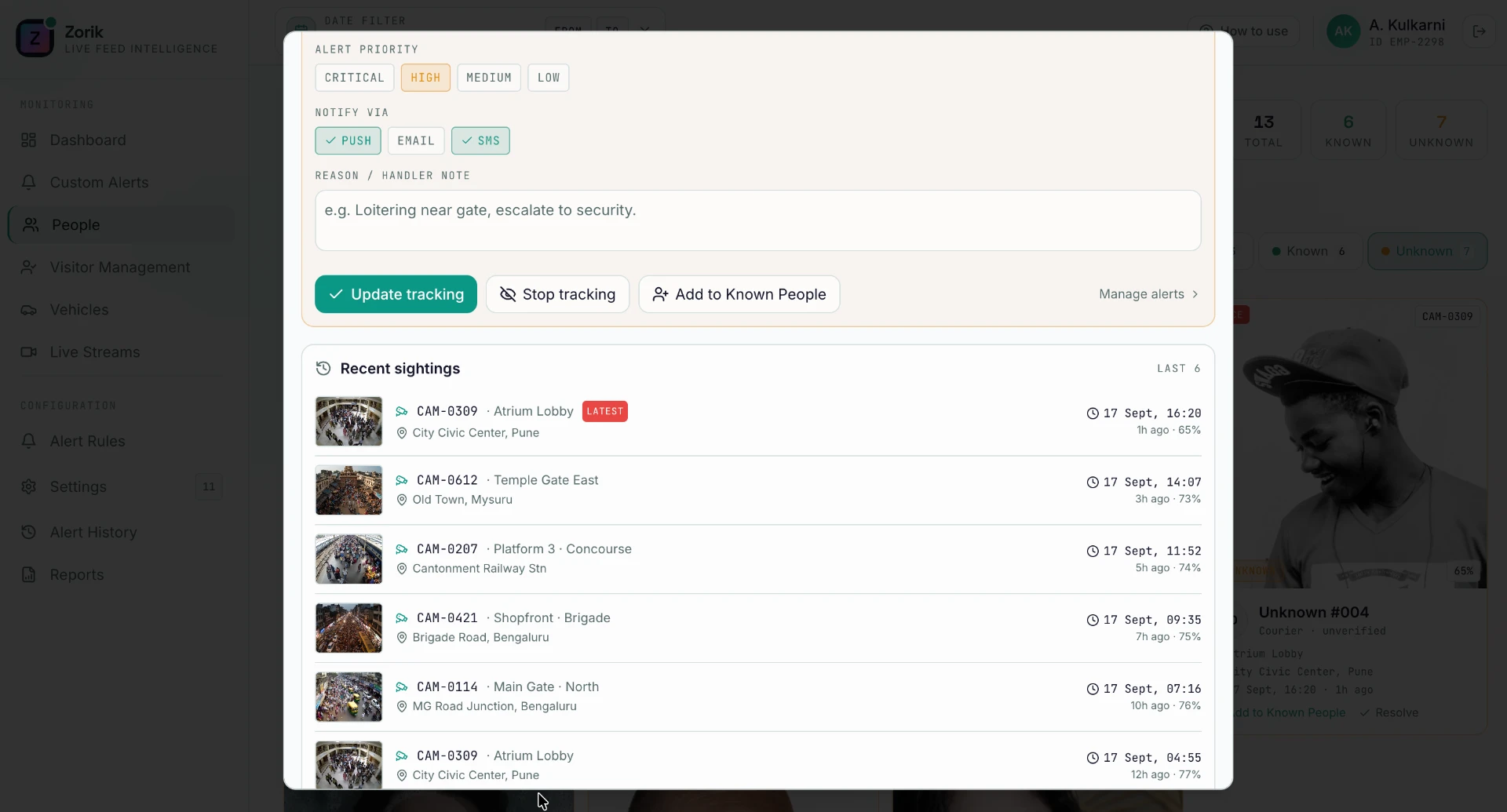
The people workflow combines alert priority, notification controls, handler notes and a chronological sighting history. It gives an operator enough context to continue tracking, pause it or move a person into an approved known-person workflow.
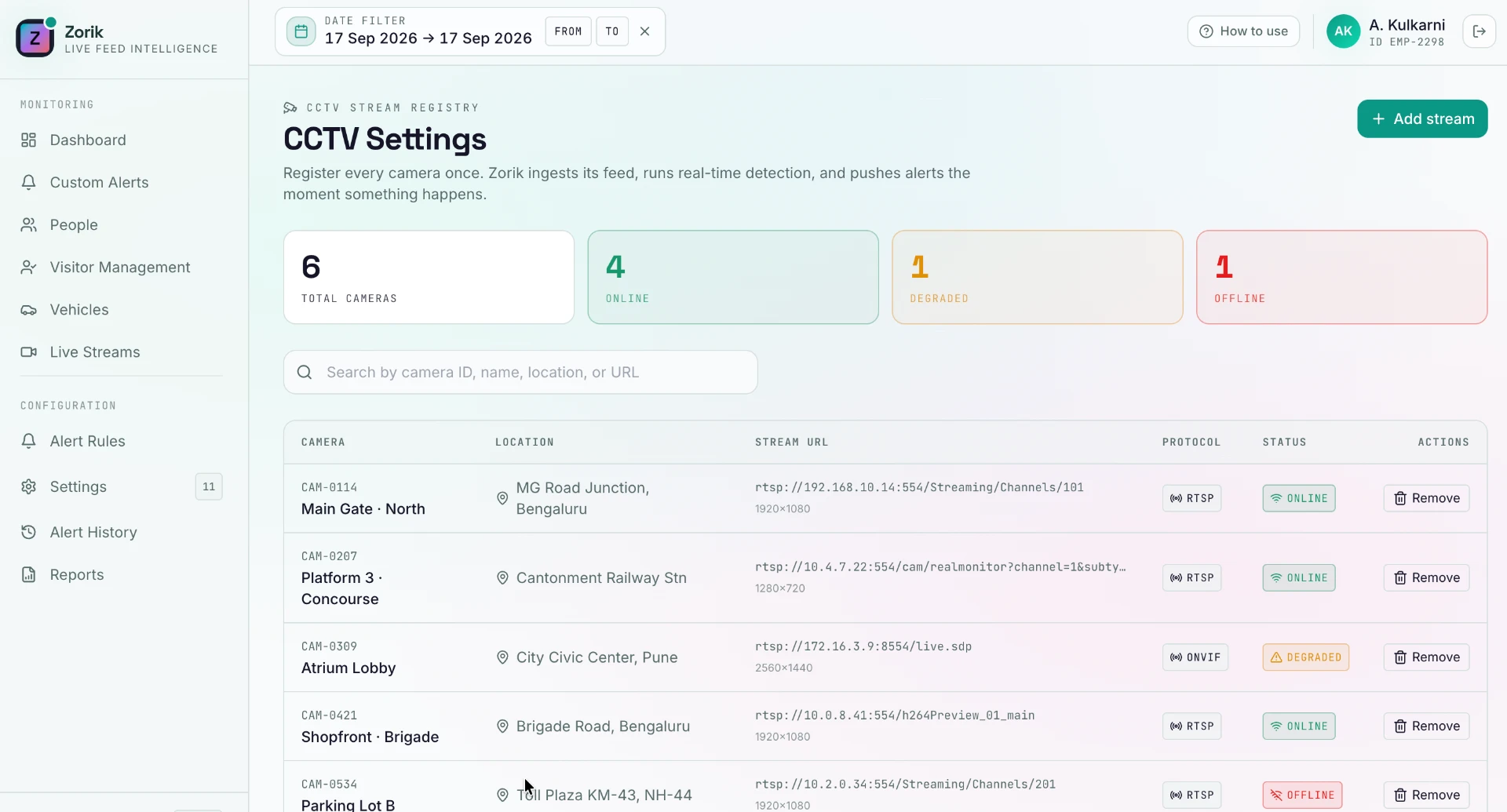
The camera registry keeps identifiers, locations, stream endpoints, protocols and health states together. Online, degraded and offline conditions remain visible so teams can distinguish an event-free site from a feed that is no longer dependable.
The delivered experience
VirtualCTO brings computer vision, product design, edge engineering and production deployment together around the operational job.